
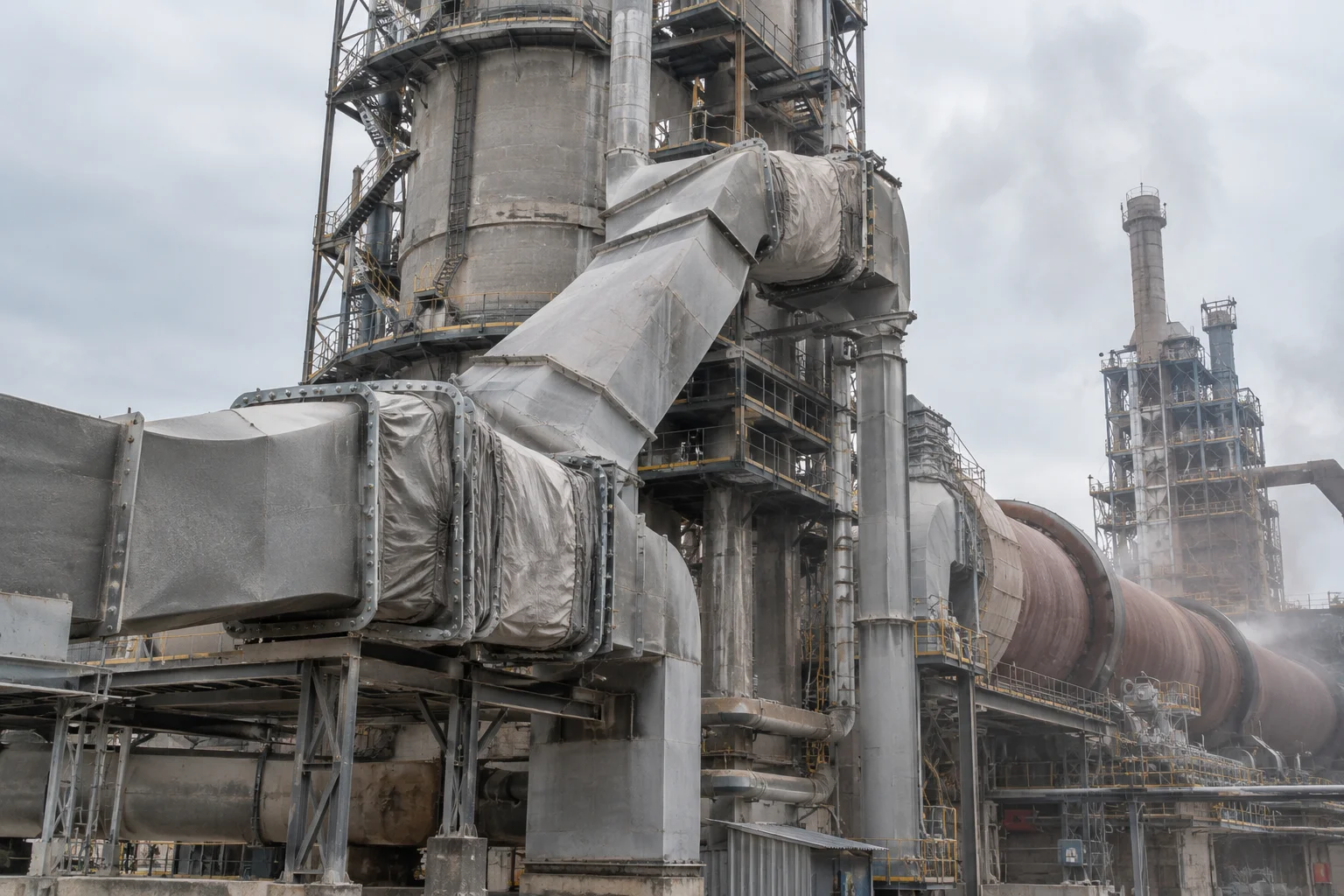

Cement plants run some of the harshest duct and piping conditions in industrial manufacturing — kiln gas temperatures well above 300°C, heavy dust loading, continuous thermal cycling during startup/shutdown, and long duct runs between the kiln, preheater tower, and ESP (electrostatic precipitator). Expansion joints are what keep that ducting intact under conditions that would crack rigid steel within a few thermal cycles.
Why Cement Plant Ducting Needs Expansion Joints
Three conditions make cement plant ducting especially demanding compared to general industrial piping:
- Extreme, cycling temperatures — kiln inlet and preheater gases run hot continuously, but every planned shutdown and startup puts the ducting through a full thermal cycle, which is what actually drives fatigue failure over time
- High dust and particulate loading — kiln exhaust gas carries significant dust, which is abrasive to flexible elements and requires the expansion joint design to resist erosion, not just heat
- Long, rigid duct runs — the physical distance between the kiln, preheater tower, and ESP means even small thermal expansion per meter of duct adds up to significant total movement that has to be absorbed somewhere
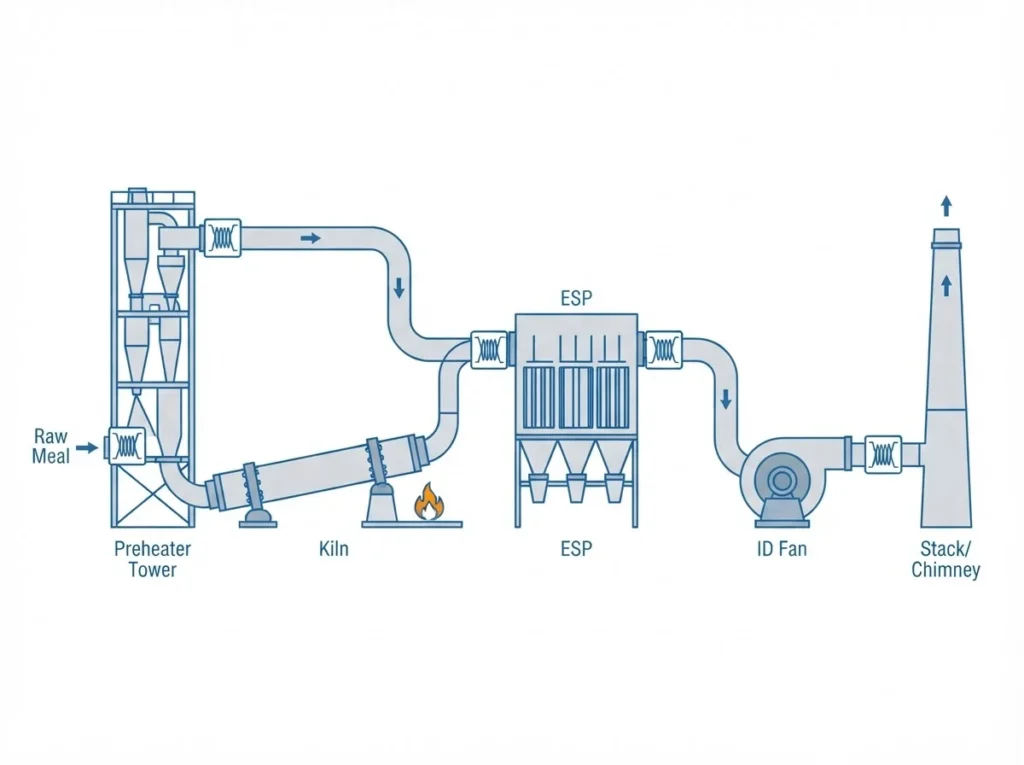
Where Expansion Joints Are Used in a Cement Plant
Kiln inlet and outlet ducts — connecting the rotary kiln to the preheater tower and cooler, these see the highest temperatures in the plant and require expansion joints rated for continuous high-heat exposure.
Preheater tower ducts — the cyclone stages of a preheater tower are connected by ducting that experiences both thermal movement and structural settling of the tower itself over time.
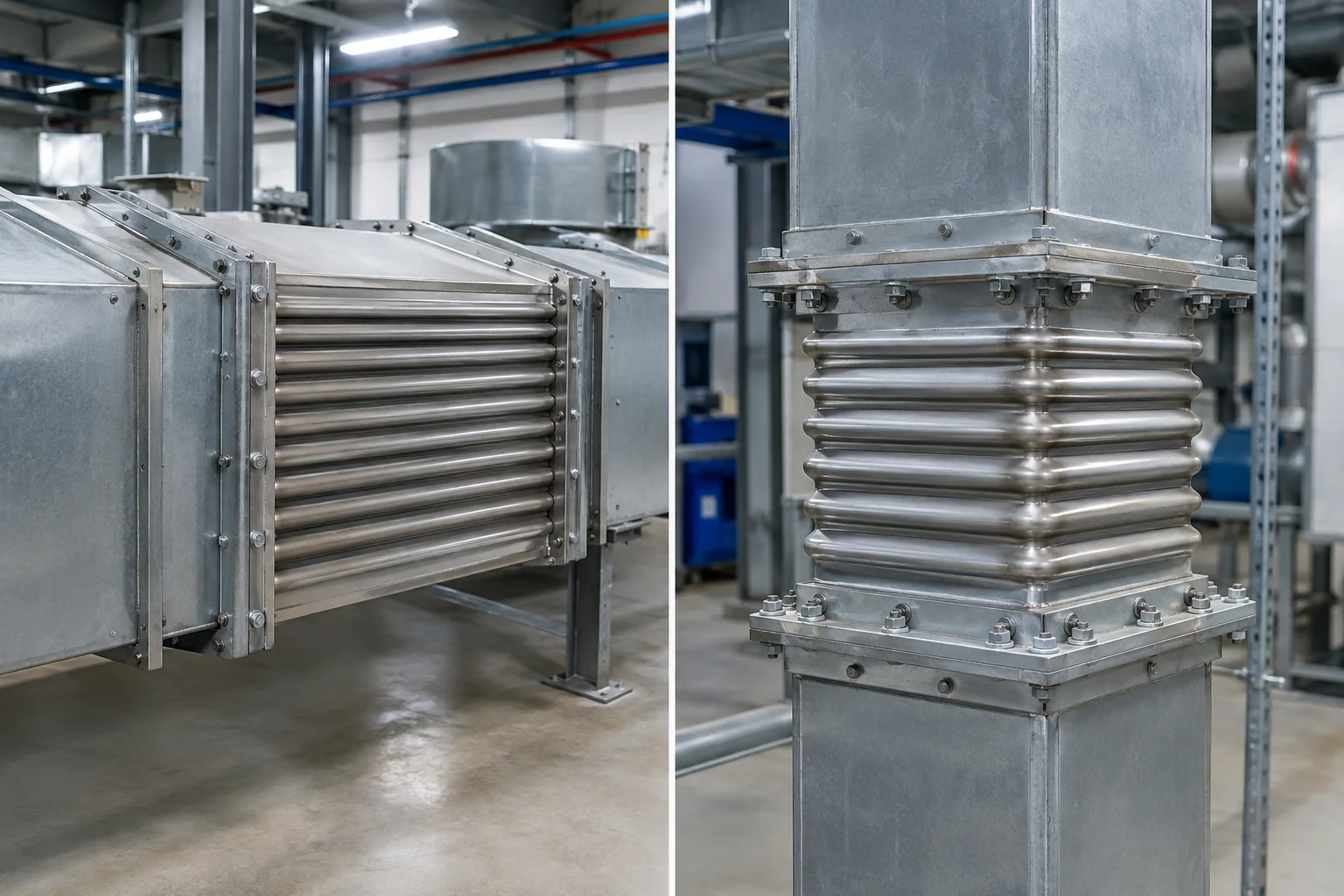
ESP inlet/outlet ducts — electrostatic precipitators are typically connected via rectangular ducting, where rectangular expansion bellows are commonly used to accommodate the duct’s elongated cross-section while absorbing thermal movement between the ESP housing and connecting ductwork.
ID (induced draft) fan connections — fan vibration combined with hot, dust-laden gas makes this another common expansion joint location, isolating fan-induced vibration from the rest of the duct system.
Cooler and clinker transport ducts — lower-temperature than the kiln itself, but still subject to thermal cycling and mechanical vibration from cooling equipment.
Which Type of Expansion Joint Fits Which Location
| Location | Typical Conditions | Commonly Used Type |
|---|---|---|
| Kiln inlet/outlet | Highest temperature, continuous cycling | Fabric expansion joints (often refractory-lined for insulation) |
| Preheater tower ducts | High temperature, structural movement | Fabric expansion joints |
| ESP inlet/outlet | Moderate-high temperature, elongated duct cross-section | Rectangular expansion bellows |
| ID fan connections | Vibration-dominant, moderate temperature | Metallic or fabric, depending on temperature |
| Cooler/clinker ducts | Lower temperature, dust-heavy | Metallic expansion bellows |
Fabric expansion joints are generally preferred for the highest-temperature locations (kiln and preheater) because they can be engineered with insulating/refractory layers that a purely metallic design cannot easily incorporate, while still absorbing large movement. Metallic and rectangular bellows are typically used further along the gas path where temperatures are lower but duct geometry and vibration resistance become the deciding factors.
Selection Checklist for Cement Plant Expansion Joints
- Confirm actual gas temperature at the specific duct location — don’t assume kiln-inlet temperature applies plant-wide; temperature drops significantly by the time gas reaches the ESP.
- Account for dust/particulate loading — the exposed face of the expansion joint needs to resist abrasion, which affects material and liner selection.
- Match duct cross-section exactly — rectangular vs square vs round ducting is common across different sections of the same plant, so verify the shape at each specific location.
- Plan for thermal cycling, not just peak temperature — a joint rated for continuous high heat may still fail early if it’s not also designed for repeated startup/shutdown cycling.
- Confirm insulation/refractory requirements — for high-temperature fabric joints, ask whether an internal insulation layer or metallic baffle is needed to protect the fabric itself from direct hot-gas contact.
This varies significantly by location in the plant — kiln inlet ducts run far hotter than ESP or cooler ducts. Always specify the actual measured or design temperature at the specific installation point rather than a plant-wide assumption.
Generally no — different locations (kiln, preheater, ESP, ID fan) have different temperature, dust, and duct-geometry conditions, so plants typically use a mix of fabric and metallic/rectangular expansion joints depending on location.
Given the combination of high heat, dust erosion, and thermal cycling, cement plant expansion joints generally warrant more frequent visual inspection than expansion joints in less demanding services — checking for fabric wear, metallic fatigue cracking, and liner condition during planned maintenance windows.
MechFlex Bellows supplies fabric and metallic expansion joints engineered for cement plant kiln, preheater, ESP, and duct applications. Contact us with your duct location, temperature, and dimensions for a recommendation.


Leave A Comment