
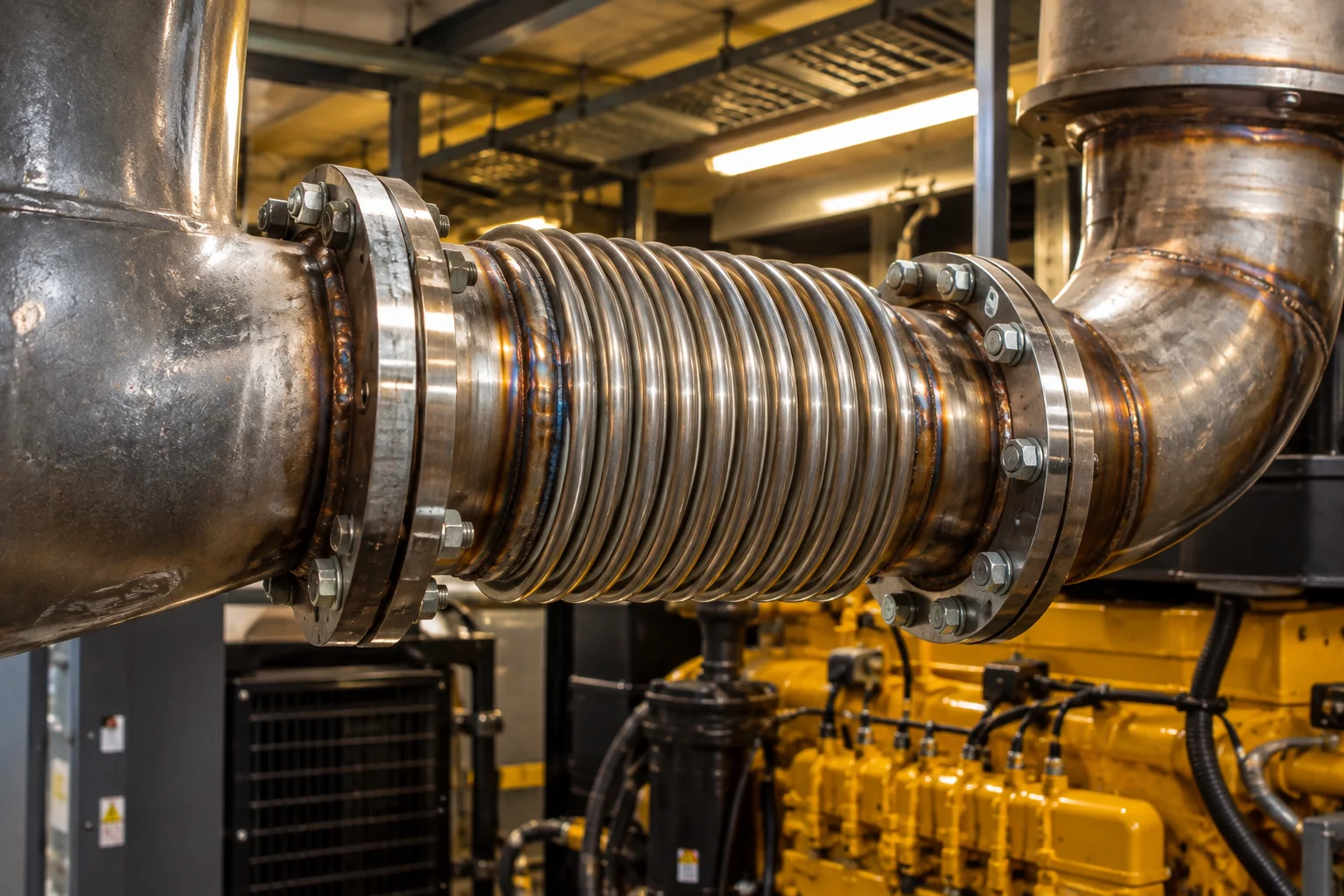

Exhaust systems on generators, DG sets, and industrial engines run hotter and vibrate harder than almost any other piping in a plant. Without a properly engineered exhaust expansion bellows, that combination of extreme heat and constant mechanical vibration will crack rigid piping, stress engine exhaust manifolds, and eventually damage connected equipment. Here’s what exhaust expansion bellows do, what they’re made of, and how to select the right one.
Why Exhaust Piping Needs an Expansion Bellows
Three forces act on exhaust piping simultaneously, and a rigid pipe run can’t absorb any of them safely:
- Thermal expansion — exhaust gas temperatures can swing from ambient to several hundred degrees Celsius within minutes of engine start-up, causing the metal piping to expand and contract repeatedly
- Engine vibration — running gensets and DG sets transmit continuous mechanical vibration directly into the connected exhaust piping
- Misalignment — engines are often mounted on vibration-isolating mounts, meaning the engine and the fixed exhaust stack are never perfectly rigid relative to each other
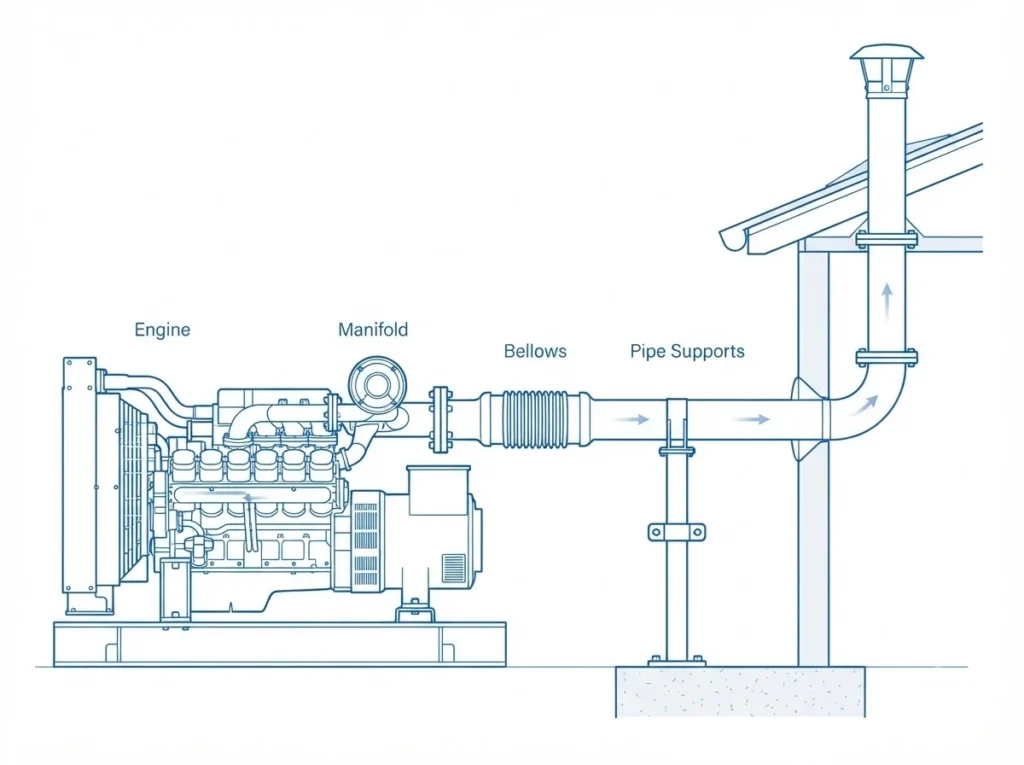
An exhaust expansion bellows absorbs all three, isolating the rigid exhaust stack and silencer from the engine’s movement and protecting welded joints, flanges, and the turbocharger housing (where fitted) from fatigue stress.
Materials Used in Exhaust Expansion Bellows
Because of the temperature range involved, exhaust bellows are typically fabricated from high-temperature stainless steel grades rather than standard SS304:
- SS309 / SS321 — commonly used for their high-temperature oxidation resistance and stability under thermal cycling
- Multi-ply bellows construction — often used to combine flexibility with pressure/vacuum resistance in a thinner overall wall section, since a single thick-wall bellows would be too stiff to flex properly
The right material choice depends on peak exhaust gas temperature, duty cycle (continuous vs standby genset operation), and whether the installation is indoor or exposed to weather.
Key Design Considerations
- Operating temperature range — get the actual peak exhaust gas temperature from the engine manufacturer’s datasheet, not an estimate; this determines material grade.
- Axial vs lateral movement — most genset exhaust bellows are designed primarily for axial movement (engine mount settling, thermal growth along the pipe run), but lateral offset should be checked if the engine is on spring-type vibration isolators.
- Pressure/vacuum rating — naturally aspirated and turbocharged engines see different backpressure profiles; the bellows needs to be rated for the actual operating pressure, not just temperature.
- Support and guide design — an exhaust bellows should never be asked to also support the weight of the piping; proper pipe guides and supports on either side of the bellows are essential to prevent it from absorbing loads it wasn’t designed for.
- Corrosion resistance — condensation inside exhaust systems during cold starts can be acidic; material selection should account for this, not just peak-temperature resistance.
Common Applications
- DG set (diesel generator) exhaust systems — the most common application, isolating engine vibration from the exhaust stack
- Genset installations in commercial and industrial buildings — where noise and vibration transfer to structural elements is also a concern
- Boiler and furnace exhaust/flue connections — similar thermal-cycling and vibration-isolation requirements
- Marine and standby power exhaust systems — where space constraints often require a compact bellows design
This depends heavily on duty cycle, temperature exposure, and material grade — continuous-duty industrial gensets typically see more wear than standby units used only during outages. Regular visual inspection for cracking or corrosion at the convolutions is the most reliable way to catch wear before failure.
Not recommended. Standard bellows materials are typically rated for lower continuous temperatures than exhaust gas reaches, and using an undersized material grade significantly shortens service life.
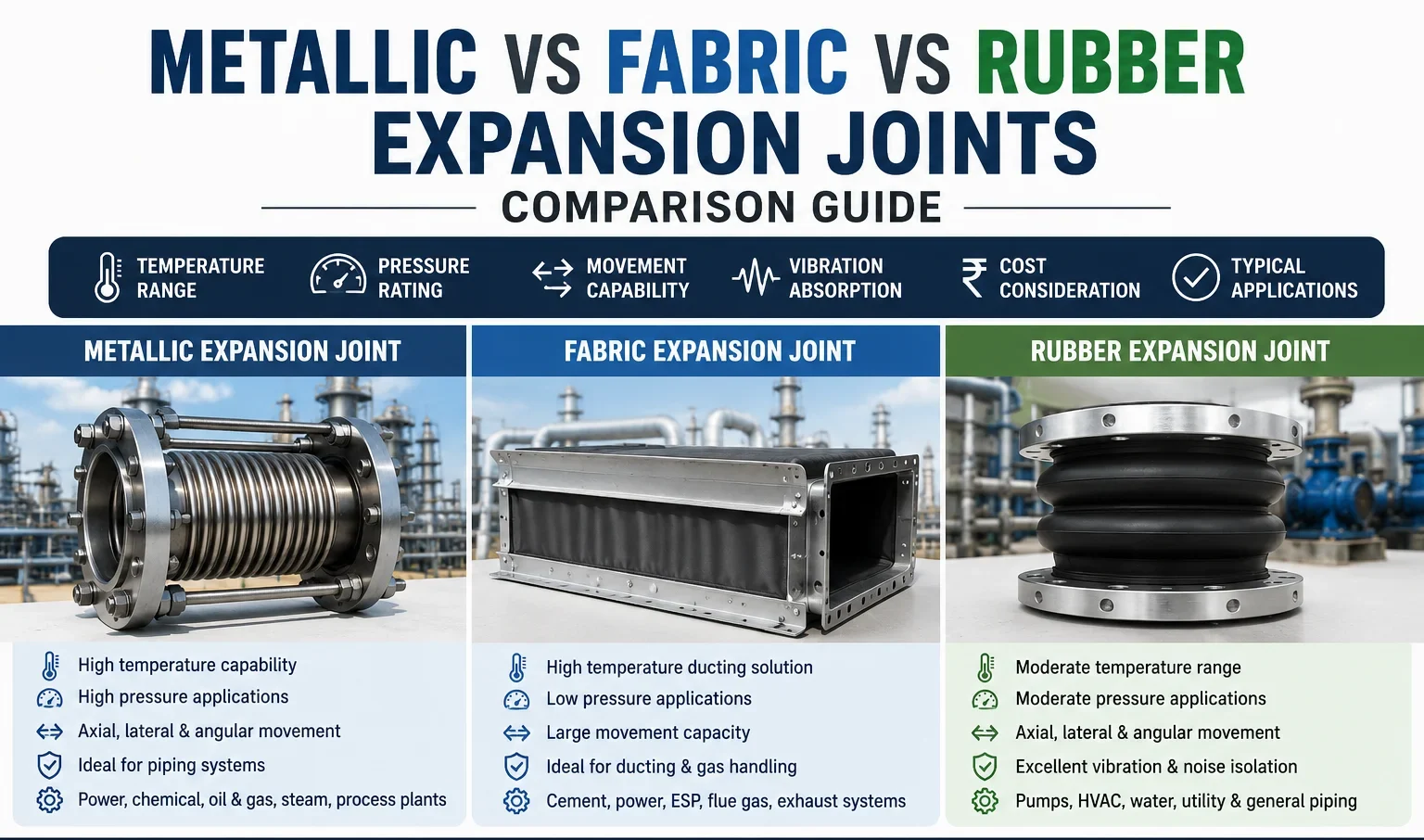
The core function is the same — absorbing movement and thermal expansion — but exhaust bellows are specified for higher continuous operating temperatures and are usually designed with the specific vibration profile of reciprocating or turbine engines in mind.
MechFlex Bellows engineers custom exhaust expansion bellows for genset, DG set, and industrial exhaust systems, built to your engine’s temperature, pressure, and movement requirements. Contact us with your exhaust system specifications for a tailored recommendation.


Leave A Comment